A crowded workshop rarely fails because it lacks tools. It fails when the drill is buried, the charger is tangled, or the wrench you need sits beneath three cases. Choosing the best Power Tool Organizer in 2026 starts with those everyday moments. The right system should fit your tools, your workspace, and the way you actually work—not just look tidy in a product photo.
Measure the wall, shelf, or cabinet before comparing models. Count your cases and chargers, then check their dimensions. A compact rail may suit a small garage, while a rolling cabinet can make sense for a shared workshop. Look closely at load ratings, mounting hardware, material thickness, and whether frequently used tools remain easy to reach. Small details matter. So does the price of replacing a poorly mounted organizer.
A useful expert quotation would add authority here, but no source article or verified quotation was provided. I won’t invent a specialist’s name or attribute made-up words to a real person. That matters because storage advice should be practical and checkable. This guide focuses on clear selection criteria, trade-offs, and details you can inspect before buying. One honest limitation remains: the best choice depends on your tool collection and available space. Measure twice. Then compare.
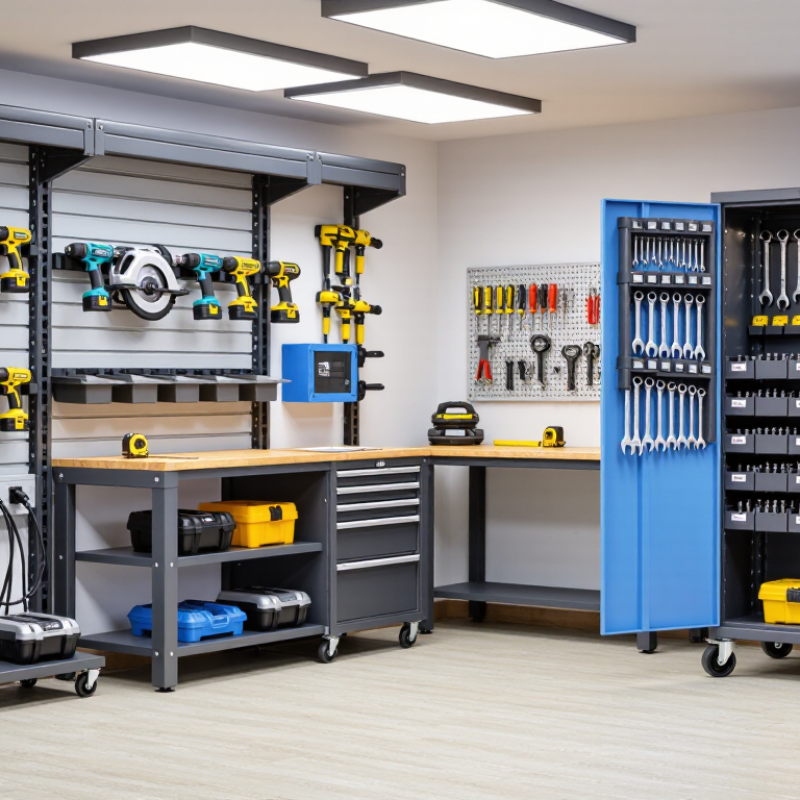
Start with a count. List each tool, battery, charger, and accessory you actually use, then measure the largest item, not just the average one. A drill may fit easily, while its charger, long bits, and spare battery fill a separate drawer. Note which tools you reach for daily and which can stay stored. Leave room.
Your storage location matters as much as your collection. Measure the wall, shelf, or vehicle space, including doorways and clearance for opening drawers. In a damp garage, enclosed storage may help protect metal parts; in a shared workshop, visible labels can reduce rummaging. The U.S. Bureau of Labor Statistics’ 2023 Census of Fatal Occupational Injuries recorded 1,075 fatal injuries among construction and extraction workers. That figure does not show that organizers prevent injuries, but it is a reminder to keep tools orderly and walkways clear.
Match the organizer to how you work. A portable case suits frequent trips between rooms; a fixed cabinet can hold heavier tools and reduce clutter on a small bench. Check load ratings, mounting requirements, and whether sharp or bulky accessories need separate compartments. I would avoid buying for a “future collection” too early. Even careful measurements can miss awkward shapes, so sketch the layout and test it with your current tools before committing.
Start with the tools you reach for most. Wall rails keep drills, drivers, and chargers visible, but they need secure mounting and clear wall space. Drawer cabinets protect small bits from dust and falling debris. Rolling carts suit active work areas, though wheels can snag on cords or uneven floors. Fabric bags are light and portable, but offer less protection against crushing. Dust matters.
Material affects both durability and handling. Steel resists dents and supports heavier loads, yet can rust in damp spaces and adds weight. Molded polymer resists moisture and is easier to move, but may crack under impact. Fabric works for hand tools and accessories, not loose heavy equipment. Check load ratings, drawer dimensions, and whether a full drawer stays stable when opened.
Capacity is more than a tool count. Measure bulky items, including drill bodies, battery packs, and long bits, then leave room to remove them without scraping knuckles. NIOSH’s 1994 Revised Lifting Equation uses a 51-pound load constant only under ideal lifting conditions; reach, twisting, and repetition reduce the recommended load.
That’s a useful reminder to keep heavy tools near waist height, not overhead. One trade-off is easy to miss: buying extra capacity can make a compact workspace harder to navigate. Measure twice.
Portability should match the way tools move through your workday. If you carry equipment between rooms or job sites, check the loaded weight, handle grip, and wheel stability. A compact organizer is easier to lift, but it may force you to leave useful tools behind. Test how it feels with your typical load, not when empty. That difference matters.
Access affects both speed and safety. Look for drawers or compartments that open fully without blocking a walkway. Keep frequently used items near the top, and check whether dividers stop tools from shifting during transport. A neat layout can still frustrate you if sockets hide beneath bulkier equipment. Try reaching for common tools while wearing work gloves. Small details count.
Workspace compatibility is easy to overlook. Measure the available floor space, shelf depth, and clearance around benches or vehicle doors before choosing a unit. Check the organizer’s rated capacity and mounting requirements against your actual setup. A large cabinet may seem like the safer choice, though it can crowd a narrow workshop. I would rethink that instinct: more storage is not always better. Leave room to move, open drawers, and return tools without rearranging the whole space.
Start with the organizer’s load rating, then compare it with the weight of your tools. Check whether shelves flex under pressure and whether drawers stay shut when moved. For rolling cabinets, test the wheel locks and look for a tip-resistant design. Wall-mounted systems should include clear mounting instructions and hardware suited to your wall type. A tidy wall is not automatically a safe one. Keep walkways clear, and store sharp or heavy tools where they cannot fall onto hands or feet. OSHA’s walking-working-surfaces rule calls for orderly work areas. The Bureau of Labor Statistics reported 2.6 million nonfatal workplace injuries and illnesses in private industry in 2023; that broad figure does not show that storage alone prevents injuries.
For 2026 models, useful features may include adjustable rails, modular bins, corrosion-resistant finishes, and clear load labels. Choose parts you can replace, not just a system that looks sleek in a showroom. If the organizer includes battery charging, follow the tool maker’s charging instructions and avoid enclosed spaces without suitable ventilation. Check warranty terms and whether the seller publishes capacity tests or installation guidance. A magnetic strip can be handy for small bits, but it will not secure a heavy drill. Measure the space with drawers and doors fully open. I once underestimated that clearance.
A low purchase price can be misleading if an organizer bends, tips, or wears out quickly. Set a budget that includes the space it saves and the repairs it may need. Measure your tools first, including bulky batteries and accessories. A rack with adjustable slots may cost more, but it can prevent crowded handles and wasted space.
Check the load rating, joints, and wheel quality before paying extra for appearance. Steel can handle heavy tools, but exposed surfaces may need occasional cleaning in damp garages. Plastic resists moisture and is easier to wipe down, though thin panels may flex under concentrated weight. Look for replaceable casters, screws, or dividers. Small parts matter. If one broken wheel makes the whole unit awkward to move, the cheaper option may not stay cheap.
Think about maintenance you will actually do. A design with open shelves is easy to inspect, but dust can settle on tools. Drawers protect equipment, yet packed drawers can hide rust or missing parts. Not always. I would rather choose a sturdy organizer that fits the tools I own than pay for capacity I may never use. Still, that choice can change as a workshop grows, so leave a little room for new equipment.
Count the tools, batteries, chargers, and accessories you use. Measure the largest tool and longest bit. Leave room.
Choose a portable case if tools move between rooms or work sites. A fixed cabinet suits heavier tools and a small bench. Test it loaded.
Place daily tools near the top. Use dividers to stop bits and sockets from shifting. Try reaching for them with work gloves on.
Measure floor space, shelf depth, and nearby doorways. Check drawer clearance with drawers fully open. I once underestimated that space.
Check load ratings, stable shelves, secure drawers, and wheel locks. Mount wall systems with suitable hardware. Keep walkways clear.
Not necessarily. Extra compartments can hide small sockets beneath bulky tools. Match the layout to what you actually reach for.
Adjustable rails, modular bins, corrosion-resistant finishes, and clear load labels can help. Replaceable parts matter. Looks can mislead.
Follow the tool maker’s charging instructions. Avoid enclosed spaces without suitable ventilation. Check warranty terms and installation guidance. Don’t guess.
Choosing the best Power Tool Organizer in 2026 starts with understanding what you own and how you work. Take stock of your tools, accessories, and available storage space, then compare organizer styles, materials, and capacity to find a setup that fits your collection. Consider whether you need a fixed storage solution or something portable, and check that tools are easy to reach without crowding your work area.
Before buying, assess safety, durability, and useful features that support your everyday tasks. A sturdy design, secure storage, and practical organization can help protect tools and keep your workspace orderly. Finally, weigh the initial cost against expected longevity and maintenance needs. The right choice is not necessarily the most expensive option; it is the Power Tool Organizer that suits your tools, space, budget, and long-term plans.

BD Medical