In 2026, choosing a Portable Tool Box means balancing storage, durability, and the way you actually work. The best option is not always the largest or most expensive. A box that fits neatly behind a truck seat may suit a mobile technician, while a wheeled model can make sense for a busy workshop. Think about where your tools travel, how often you carry them, and what surfaces they meet along the way.
Small details matter. A lid that stays open, a handle that feels comfortable, and latches that close securely can save time during a long workday. That matters. Before buying, check the box’s internal layout against your real tools—not just the product photos. A drill, loose sockets, and a tape measure can quickly expose wasted space or awkward compartments. No box fits everything.
Pay attention to construction, weight, capacity, and weather resistance. Metal cases may handle rough use, but they can be heavy. Plastic models are often easier to carry, though quality varies, so inspect hinges, corners, and latch points. If you work outdoors, look for clear information about water resistance; do not assume that “tough” means waterproof. This guide will compare practical features and common trade-offs to help you narrow your choices. One thing is easy to overlook: your tool collection may change. Choose a design with room for likely additions, but avoid paying for space you will never use. Tool storage is personal, and even a careful choice may need adjusting after a few weeks on the job.
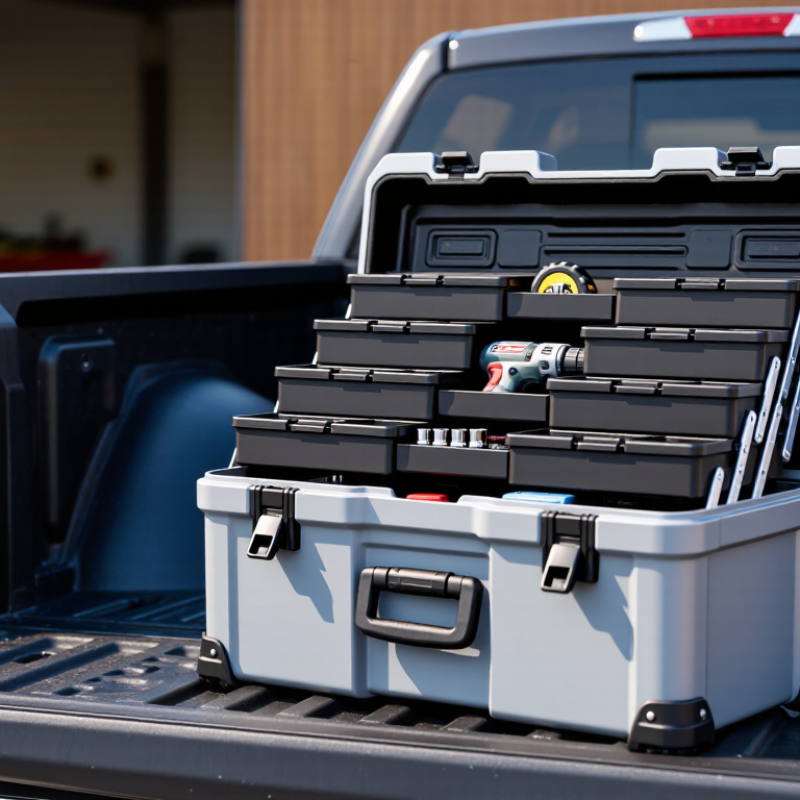
Before comparing tool boxes, list what you actually carry on a typical workday. A tape measure, two screwdrivers, pliers, and a compact drill need less room than a full repair kit. Include awkward shapes, spare batteries, and tools you reach for often. Then measure the longest item, not just the pile. Small detail. A box that fits on paper may still force you to stack tools, leaving the ones underneath frustrating to reach. Estimate the weight when everything is loaded, too.
Think about where the box will sit and how you’ll move it. A narrow closet, crowded vehicle, and damp shed create different storage needs. Check shelf depth, doorway width, and whether the lid can open fully in its usual spot. If you carry the box upstairs, consider its loaded weight; an empty-box rating tells only part of the story. Wheels can help on smooth floors but catch on gravel or stair edges. The handle should feel balanced when the load shifts. I still tend to overpack. Leave a little space for the tools you may add later, but don’t buy a much larger box for a vague possibility.
Portable tool boxes differ in how they move and how quickly tools stay accessible. A molded carry case works for a fixed kit: shallow compartments keep bits and small fittings visible, but bulky tools can waste space. A soft-sided bag is lighter and fits around awkward equipment. Its flexible pockets, however, may let sharp edges press through or small parts disappear. A compact rolling chest suits heavier loads on smooth floors, though stairs and gravel quickly become a nuisance.
Layout matters as much as capacity. Choose removable trays for fasteners you use daily, and deeper bays for a drill or meter. Put frequently used items near the handle, so you do not unload the whole box to reach them. Check whether dividers stay put when the box tips; a neat showroom layout can become a mixed pile in a vehicle. The U.S. Bureau of Labor Statistics counted 2.6 million nonfatal workplace injuries and illnesses in private industry in 2023, in its Employer-Reported Workplace Injuries and Illnesses report. That figure does not prove a particular box prevents injury, but it is a reason to consider carry weight and grip comfort. A layout that saves space may still be awkward to lift. Test it loaded, not empty.
How to Choose the Best Portable Tool Box in 2026?
Evaluate Materials, Construction, Security, and Weather Resistance
A portable tool box should feel sturdy before it is full. Compare steel, aluminum, and reinforced plastic by considering weight, corrosion resistance, and the tools you carry. Check corners, hinges, handles, and drawer slides for flex or rough movement. A handle that digs into your palm can become tiring on a long walk. Small details matter. Look for joined seams and a lid that closes evenly, not just a thick-looking shell.
Tips: Load the box with a few typical tools before buying. Lift it, carry it, and open every compartment. For security, check whether the latches accept a lock and resist accidental opening. A lock can deter casual access, but it does not make a box theft-proof.
For outdoor work, inspect the lid seal and drainage design. Rain resistance helps, but it is not the same as waterproofing. Dust can also enter through gaps around drawers. Think about where the box will sit: a damp truck bed needs different protection than a dry workshop shelf. I would not choose the heaviest model by default; extra strength can mean awkward carrying. Yet a very light box may flex under dense tools, so the right balance takes a little testing.
Choosing a portable tool box in 2026 starts with the tools you actually carry, not the biggest capacity on the shelf. Lay out your regular kit and measure the longest items, such as a level or handsaw. Then allow room for consumables without letting small fasteners disappear beneath heavier tools. Adjustable dividers help, but too many compartments can waste space. Capacity is useful only when the box remains safe to lift. Check its loaded weight, not just its empty weight.
Ergonomics matter during repeated trips from a vehicle to a work area. Look for a handle that fits your hand and does not dig into your fingers when the box is full. Try it loaded. A well-placed grip can make a short carry noticeably easier, while awkward latches may slow access when you are wearing gloves. For longer distances, inspect wheel size, axle stability, and handle extension; small wheels can struggle over gravel or uneven thresholds. Small detail. Measure the box against your vehicle’s storage space and check whether its compartments fit your existing cases or organizers. Compatibility claims can be vague, so compare actual dimensions and closure styles. I might choose a slightly smaller box with comfortable handling over a roomier one that becomes a burden. That trade-off is easy to underestimate.
| Portable Tool Box Type | Typical Capacity | Typical External Size (W × D × H) | Typical Empty Weight | Ergonomics | Mobility | Compatibility and Best Use |
|---|---|---|---|---|---|---|
| Compact hand-carry box | 10–20 L | 35–45 × 18–25 × 18–25 cm | 1–3 kg | One top handle; best kept light enough for comfortable one-handed carrying. | Easy to carry and store; no wheels. | Good for basic household repairs and small hand-tool sets. Check that the tray or organizer fits the tools you own. |
| Medium hand-carry box | 20–40 L | 45–55 × 22–30 × 22–32 cm | 2–5 kg | A wider handle can improve grip; a removable tray helps keep frequently used tools accessible. | Portable by hand, but heavier when fully loaded. | Suitable for general maintenance and mixed hand tools. Compare internal dimensions with longer tools before buying. |
| Large hand-carry box | 40–60 L | 55–65 × 28–35 × 28–38 cm | 4–8 kg | Use two hands when loaded; a reinforced handle and secure lid latches help with safer handling. | Best for short carries; awkward on stairs or over long distances when heavily loaded. | Offers room for larger tools and accessories. Check the loaded weight and whether the box can be lifted safely. |
| Rolling tool box | 40–70 L | 45–65 × 30–45 × 40–60 cm | 5–12 kg | A telescoping handle reduces lifting on level ground; confirm that it locks securely at a comfortable height. | Wheels help on smooth floors and paved paths; stairs, gravel, and uneven ground may still require lifting. | Useful for heavier loads and longer site routes. Check wheel size, handle clearance, and whether the box fits in your vehicle or storage area. |
| Stackable modular box | 20–60 L per module | Varies by module; measure each unit before purchase | 2–8 kg per module | Separate modules can make loads easier to organize and carry; avoid stacking more weight than you can safely move. | Can be carried individually or moved as a connected stack if designed with compatible wheels or a cart. | Interlocking designs are often system-specific. Verify that latches, rails, and connectors match across modules; similar-looking units are not necessarily compatible. |
| Selection note: Capacity, dimensions, and empty weight are typical planning ranges, not universal specifications. Actual figures vary by construction and design. Check the manufacturer’s measurements, load rating, handle design, and compatibility details before purchasing. | ||||||
How to Choose the Best Portable Tool Box in 2026?
Balance new features against warranty coverage and the price you will actually pay. Modular dividers can keep sockets from rattling, while sturdy wheels help on rough workshop floors. Weather-resistant seals matter if the box travels in a damp vehicle, but they do not make every box waterproof. Check measurements with your largest tools nearby. A clever layout is no good if your drill will not fit.
Tips: Test the handle, latch, and wheels in person if possible. Read warranty exclusions, especially for removable parts and normal wear. Compare replacement-part costs, too.
A low price can be misleading when trays crack or hardware is hard to replace. A longer warranty may help, but only if the claim process is clear and the damage you expect is covered. Keep the receipt and review the written terms before buying. I would not pay extra for a feature I cannot explain using a real task. Still, judging durability from a quick showroom test is imperfect; hinges and latches reveal more after repeated use. When reviews disagree, focus on specific details, such as a loaded box tipping on a ramp, rather than broad claims that it is “solid.”
Suggested decision weights for balancing features, warranty, and price. These are planning priorities, not market-survey results.
Compare boxes using the same criteria: check usable storage and portability, inspect materials and closures, read the warranty terms, and compare total price. Adjust the weights to match your tools and how often you travel.
List your usual tools and measure the longest item, such as a level or handsaw. Leave room for a few supplies, but avoid buying space for vague future needs.
Estimate the full weight, then test the handle with typical tools inside. A comfortable grip matters. I still tend to overpack.
Compare steel, aluminum, and reinforced plastic for weight, corrosion resistance, and sturdiness. Check the corners, hinges, and handles for flex.
Open every compartment and check that drawers move smoothly and the lid closes evenly. Rough movement is worth noticing.
Not necessarily. Check the lid seal and drainage design, and remember that rain resistance does not guarantee waterproofing.
Larger wheels may handle gravel better, while small wheels can catch on uneven thresholds. Test the loaded handle and wheel stability.
Measure shelf depth, vehicle space, and doorway width. Also check that the lid can open fully where you plan to store it.
Adjustable dividers can keep fasteners visible, but too many compartments may waste space. Try the layout with your actual tools. Some trial and error helps.
Choosing the best Portable Tool Box in 2026 starts with understanding what you need to carry, where you’ll work, and how often you’ll move your tools. Consider whether a compact case, a multi-compartment organizer, or a larger wheeled box suits your tasks and workspace. The storage layout should keep frequently used tools easy to reach while separating small parts and protecting delicate items.
Compare construction materials, joints, latches, and locks, and look for suitable resistance to dust, moisture, and everyday wear. Check that the box offers enough capacity without becoming too heavy or awkward to handle. Comfortable grips, stable wheels, stackability, and compatibility with other storage units can make a noticeable difference. Finally, weigh useful 2026 features against warranty coverage and price. The right choice balances durability, organization, portability, and value for your specific needs.

BD Medical